
Coiled Tubing
Coiled Tubing
The Service
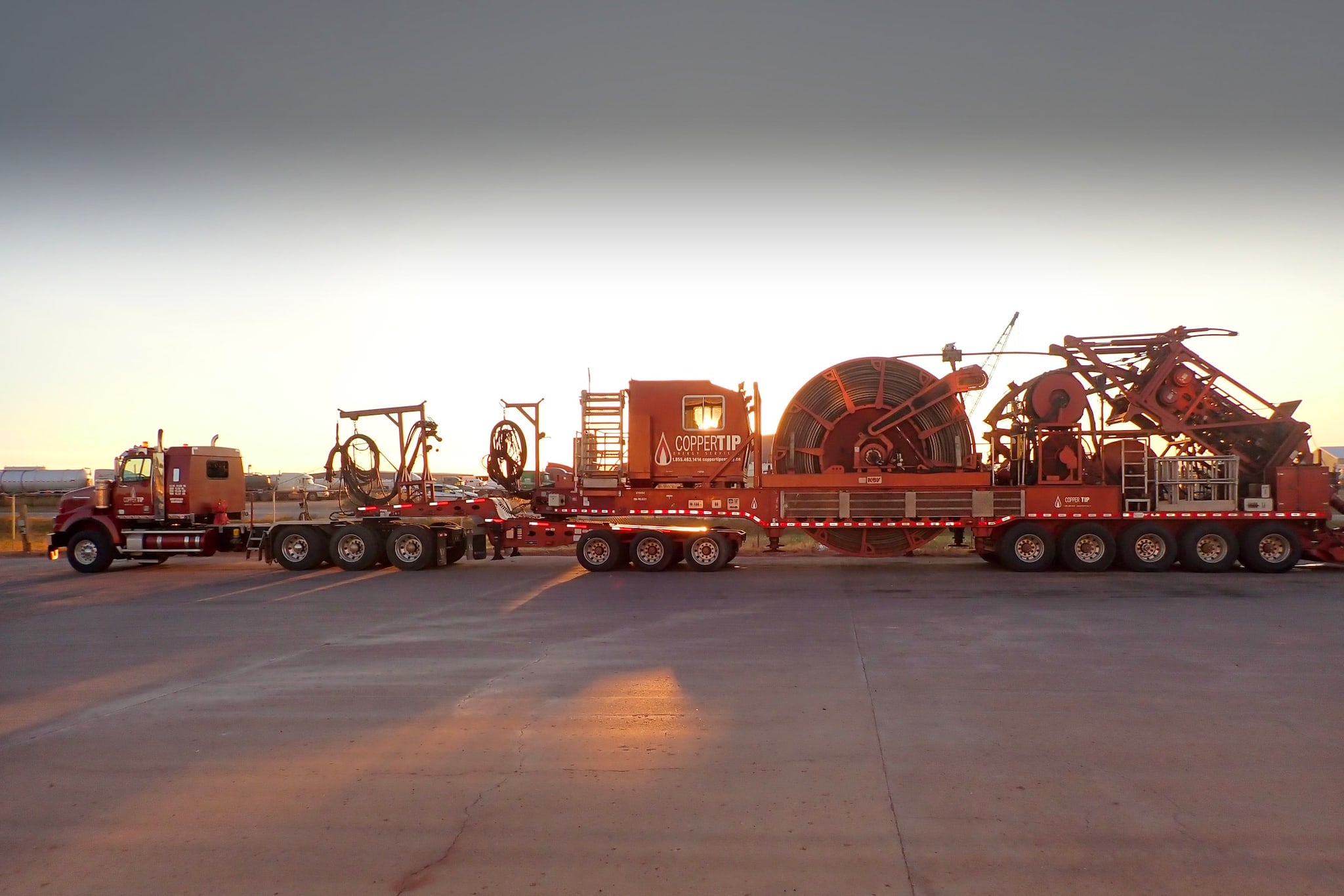
Copper Tip Energy Services operates a modern fleet of coiled tubing units built for reliability and performance in the most demanding wellbore environments across the Western Canadian Sedimentary Basin and key US plays.
Our Coiled Tubing units are equipped with computerized control systems providing continuous real-time readouts of weight, pressure, temperature, and injection rate, with full data logging available to clients on request. This level of monitoring gives operators complete visibility and confidence throughout every job.
From routine nitrogen lifts to complex multi-stage horizontal interventions, our experienced crews have the equipment and field knowledge to execute efficiently and safely, 24 hours a day.
Equipment
Applications
What We Do
Wellbore Cleanouts
- Scale, sand, and debris removal from vertical and horizontal wellbores
- Plug drillout and obstruction removal
- Optimized fluid and N₂ combinations for cleanout efficiency
- Minimal well disturbance, no kill required on a live well
Nitrogen Lift & Well Unloading
- Restoring production on loaded or killed wells
- Post-stimulation fluid unloading
- Precisely controlled injection rates to prevent formation damage
- Available with integrated flameless or direct-fired nitrogen support
Horizontal Wellbore Intervention
- Extended-reach horizontal operations across WCSB and US plays
- Multi-stage horizontal interventions
- Coil-conveyed tools for depth-accurate placement
- High-capacity CT strings for deep horizontal reach
Acid Stimulation
- Coil-spotted acid delivery for precise zone targeting
- Matrix stimulation and perforation cleanup
- Formation damage removal
- Full data acquisition, with treatment charts and CSV files on site
Fluid Circulation & Displacement
- Wellbore fluid displacement and kill operations
- Pre-job conditioning for subsequent operations
- Chemical batch displacement and wellbore preparation
Coil-Conveyed Perforating
- Depth-accurate perforating in horizontal wellbores
- Single-trip perforation and stimulation operations
- Applied across multi-zone horizontal completions
Coiled Tubing
Service
You Can Count On
Our crews and equipment are available around the clock across Canada and the United States.
Equipment & Operations
Where We Work
Basins & Regions
Understanding the Service
What is Coiled Tubing?
Coiled tubing is a continuous length of flexible steel pipe wound on a large reel, spooled into a wellbore using a specialized injector head. Unlike conventional pipe, coiled tubing can be run into a live well under pressure without killing the well first, making it faster and less disruptive than traditional workover operations.
Copper Tip's Coiled Tubing units are equipped with computerized control systems providing continuous real-time readouts of weight, pressure, temperature, and injection rate. This level of monitoring gives operators complete visibility and confidence throughout every job, from routine nitrogen lifts to complex multi-stage horizontal interventions.
Coiled tubing service is available 24 hours a day from our locations across the Western Canadian Sedimentary Basin and key US plays including the Permian Basin, Bakken, and Eagle Ford.
Common Questions
What is coiled tubing in oil and gas?
Coiled tubing is a continuous length of flexible steel pipe wound on a large reel, which is spooled into a wellbore using a specialized injector head. Unlike conventional pipe, coiled tubing can be run into a live well under pressure without killing the well first, making it faster and less disruptive than traditional workover operations. It is used for wellbore cleanouts, nitrogen lift, acid stimulation, and horizontal interventions.
How does coiled tubing work?
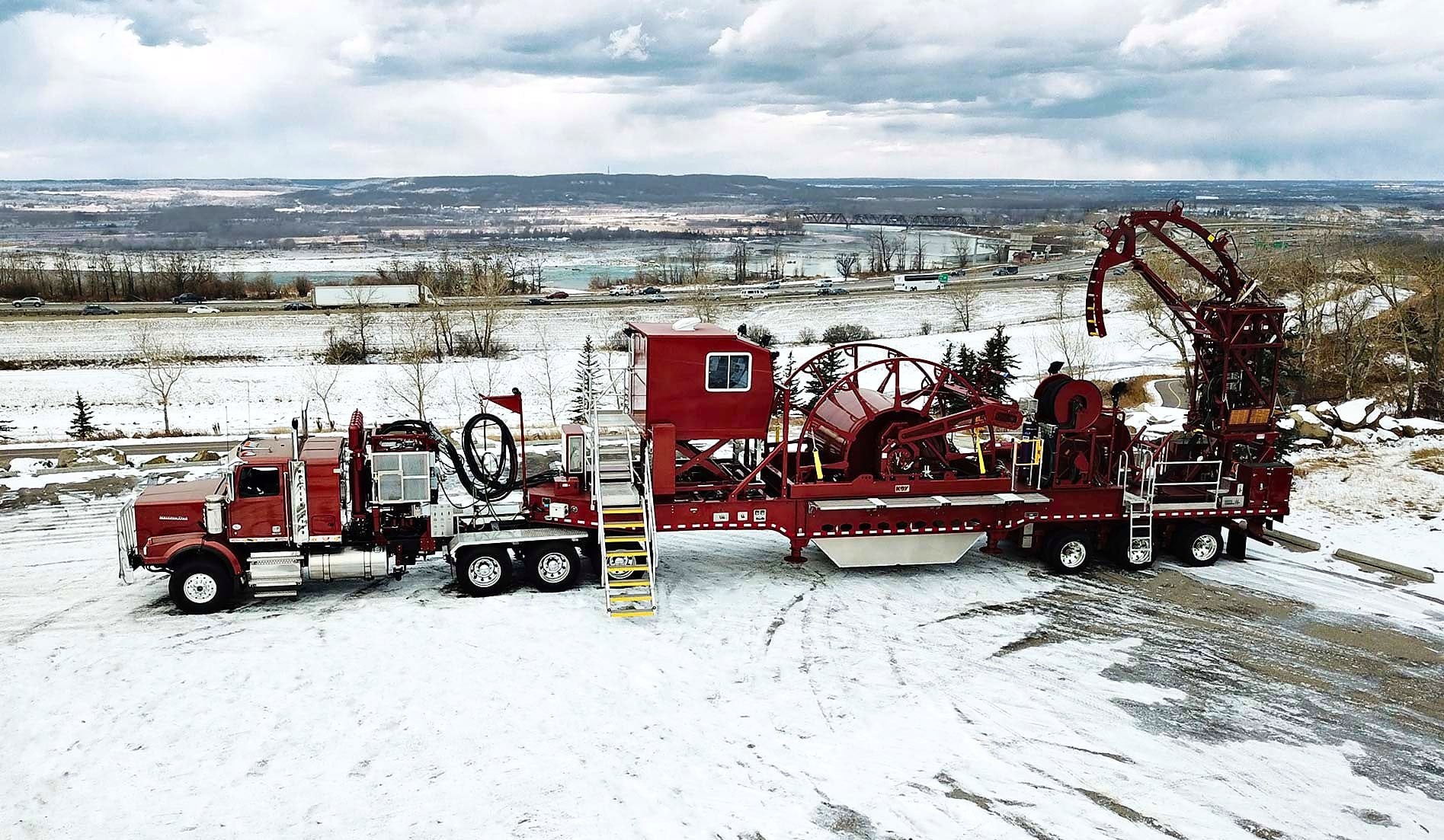
A coiled tubing unit consists of a reel of steel pipe, an injector head that grips and pushes the pipe into the wellbore, a blowout preventer (BOP) stack for well control, and a control cabin where the operator monitors real-time data including weight, pressure, temperature, and injection rate. Fluid or nitrogen is pumped down the coil to perform the treatment while the string is run in or pulled out of the hole.
What is coiled tubing used for?
Coiled tubing is used for a wide range of wellbore intervention operations including wellbore cleanouts (removing sand, scale, and debris), nitrogen lift and well unloading, acid stimulation, horizontal wellbore interventions, coil-conveyed perforating, and fluid circulation and displacement. It is preferred when speed and minimal well disturbance are priorities.
What is the difference between coiled tubing and a workover?
Coiled tubing operations are performed through the wellhead on a live well without pulling the production tubing, making them faster and less expensive than a full workover. A workover involves removing the production tubing string and typically requires a workover rig. Coiled tubing is the preferred choice for wellbore cleanouts, nitrogen lift, and stimulation when the well does not require a full workover.